
Toilets in Times of Disaster
------------------------------------------------------------------------------------------------------
We extend our deepest condolences to those who lost their lives in the earthquake centered in the Kumamoto region of Kumamoto Prefecture, and our heartfelt sympathy to everyone affected by the disaster.
We understand that it may continue to face growing anxiety amid repeated aftershocks and high temperatures in the affected areas. We sincerely pray for safety and for the earliest possible recovery and reconstruction.
------------------------------------------------------------------------------------------------------
Toilet problems
During disasters, toilets become a particularly serious problem at many evacuation shelters—often an even greater problem than damaged infrastructure such as water and electricity, which has ceased to function. During large-scale disasters such as the 2011 Great East Japan Earthquake, flush toilets became unusable in many areas.
Once a disaster occurs and flush toilets stop functioning:
・The disposal of human waste is delayed.
・As a result, bacteria in human waste can cause infectious diseases and attract pests.
・The unsanitary condition of toilets at evacuation shelters and other facilities causes increasing numbers of evacuees to experience discomfort.
・Furthermore, reluctance to use toilets may lead people to restrain themselves from urinating or defecating, which can result in reduced water and food intake. This may cause health problems among evacuees, including malnutrition, dehydration, and venous thromboembolism (economy-class syndrome).
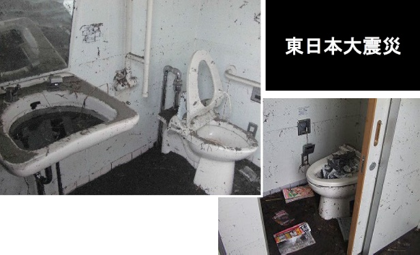
[Conditions of toilet at evacuation facilities under Great East Japan Earthquake in 2011]
(Source: “Guidelines for Securing and Managing Toilets at Evacuation Shelters,” issued in April 2016 and revised in December 2024, Cabinet Office of Japan)
These are just some of the serious problems that can arise.
Following the Great East Japan Earthquake, many cases were reported in which securing toilets during a disaster took considerable time:
・Only approximately 34% of municipalities had installed toilets, such as temporary toilets, within 3 days.
・In 14% of municipalities, installation of temporary toilet took more than 1 month.
(“Guidelines for Securing and Managing Toilets at Evacuation Shelters,” issued in April 2016 and revised in December 2024, Cabinet Office of Japan)
When toilet facilities cannot be used, human waste must be managed using such as “portable toilets” containing coagulants and bags. According to the Japanese Cabinet Office guidelines mentioned above, it is recommended that portable toilet be stored for at least 3 to 7 days (one week).
Waterless Portable Toilet
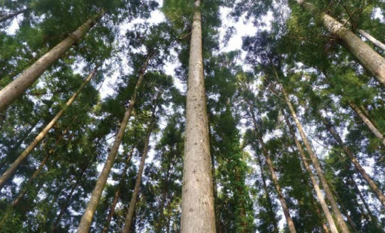
Nakawood Co., Ltd., one of our E・J group companies located in Naka Town, Tokushima Prefecture, Japan, has developed and sells a “Waterless portable toilet”. This product is made by mixing wood powder produced from forest thinning materials and sawmill offcuts with a superabsorbent polymer. It was developed to contribute to sanitary conditions during disasters and emergencies, while promoting the sustainable use of forest resources and revitalizing the forestry industry.

This portable toilet is environmentally friendly and makes use of the functional properties of cedar from Naka Town, including deodorizing, water-absorbing, and antibacterial properties. It requires no water: feces and urine are solidified into a gel, while the wood powder and deodorizing agent help prevent unpleasant odors.



(“Survey Report on Stockpiling Toilets for Use During Disasters,” Disaster and Temporary Toilet Research Group, Japan Toilet Association, July 2025 j-toilet.com)
In Japan, the household stockpiling rate for portable and simple toilets for use during disasters increased from 15.5% in 2017 to 28.8% in 2025. As awareness of disaster preparedness and emergency stockpiling grows among households, an increasing number of people are keeping portable toilets in preparation for disasters.
・Waterless Wood-Powder Portable Toilet Brochure (English)
・Introduction of Portable Toilet (Youtube)
・Nakawood Website (Japanese only)